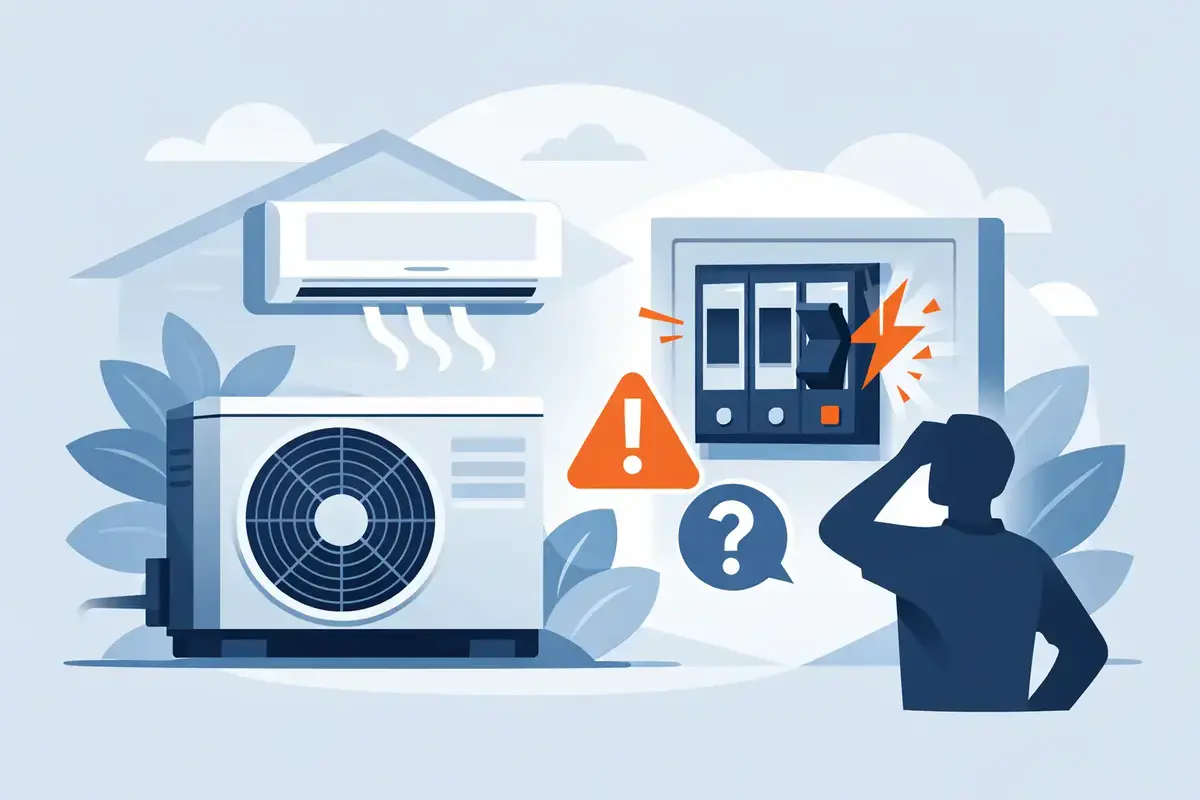
A Texas summer afternoon is a bad time to lose cooling, especially when the system starts, shuts off, and the electrical panel tells the story. When an AC breaker trips, it is doing its job: stopping electrical power because it detected a condition that could damage equipment, wiring, or the home. The right response is not to keep resetting it until the air conditioner happens to run. It is to identify whether there is a simple airflow issue or a repair that needs prompt attention.
What It Means When an AC Breaker Trips
Your air conditioner uses more electricity at startup than it does while running. The breaker is sized to tolerate that normal surge while protecting the circuit from excessive current, a short circuit, or a ground fault. If it trips once during a severe storm or a neighborhood power fluctuation, the cause may be temporary. If it trips again after being reset, there is likely an ongoing problem.
Most central systems have electrical components both indoors and outdoors. The indoor air handler or furnace blower may be on one circuit, while the outdoor condenser has its own breaker. Knowing which breaker has tripped gives a technician useful diagnostic information, but homeowners should not remove electrical-panel covers or attempt electrical repairs themselves.
A breaker that trips immediately can point to a direct electrical fault. One that trips after the system runs for several minutes may be responding to overheating, restricted airflow, or a component that is drawing too much power as it operates. Those distinctions matter, which is why a proper diagnosis is more valuable than a quick reset.
Safe Steps to Take Before Calling for Service
First, turn the thermostat to Off. At the electrical panel, move the tripped breaker fully to Off before returning it to On. A breaker can look as though it is on when it has actually tripped internally, so the full reset matters. Then wait a few minutes and set the thermostat to Cool at a temperature below the current room temperature.
If the AC starts and the breaker trips again, turn the system off and leave the breaker off. Repeatedly forcing power back to a struggling compressor, motor, or wire can turn a manageable repair into a more expensive one.
There are a few safe checks that may help. Make sure the return-air filter is clean and installed correctly. Check that supply vents are open and not blocked by furniture, rugs, or storage. At the outdoor unit, clear away leaves, grass clippings, and loose debris from the sides of the cabinet. Do not spray water into electrical areas, remove access panels, or touch wiring.
If you notice a burning smell, smoke, buzzing, a visibly damaged wire, or unusual heat at the panel, leave the breaker off and seek professional help immediately. These are not wait-and-see symptoms.
Common Reasons an AC Breaker Trips
A dirty filter or restricted airflow
A heavily clogged filter does not usually trip a breaker directly, but it can create conditions that overwork the system. Restricted airflow makes the blower work harder and can cause the indoor coil to freeze. As performance falls, the equipment may run longer and strain electrical components.
In Dallas-area homes, filters can load up quickly during high-pollen periods, construction projects, or when pets are shedding. Replacing a disposable filter on the schedule recommended for its type is a simple part of protecting both comfort and equipment life. If a clean filter does not resolve the problem, there is likely more going on than routine maintenance.
A dirty outdoor coil
The outdoor condenser releases heat from your home. When its coil is coated in dirt, cottonwood, grass, or other debris, heat cannot escape efficiently. The compressor then operates under higher pressure and can draw excessive amperage until the breaker opens.
This is one reason seasonal maintenance is not merely a convenience. A technician can clean the coil correctly, inspect electrical connections, measure operating conditions, and catch strain on the system before a peak-demand day exposes it.
A failing capacitor, contactor, or fan motor
The outdoor unit depends on several electrical components to start and run. A weak capacitor may leave the compressor or fan motor struggling to start. A worn contactor can develop pitted contacts or fail to deliver power reliably. A condenser fan motor that is dragging or overheating can also pull more electricity than it should.
These issues can produce humming, delayed startup, clicking, or a fan that does not turn even though the system is calling for cooling. Because capacitors store electrical energy and outdoor equipment involves high voltage, these are technician repairs, not homeowner projects.
Compressor problems
The compressor is the heart of the air conditioning system and one of its largest electrical loads. If it is overheating, mechanically failing, or having trouble starting, it may trip the breaker. Sometimes a hard-start component can help a compressor that is otherwise in sound condition. Other times, the compressor has sustained damage and the repair decision depends on the system’s age, refrigerant type, warranty status, and overall condition.
A professional should measure amp draw and evaluate the complete system before recommending a compressor repair or replacement. Replacing an expensive part without addressing the underlying cause can leave the new component at risk.
Refrigerant and coil issues
Low refrigerant is not normal wear and tear. It generally means there is a leak. A low charge can cause the evaporator coil to freeze, reduce cooling capacity, and place additional stress on the compressor. A dirty or damaged coil can create similar performance problems.
If you see ice on refrigerant lines or the indoor coil area, turn cooling off and allow the system to thaw. Do not chip ice away. The system will need to be checked for airflow problems, refrigerant leaks, and proper operation before it is restarted.
Damaged wiring or moisture in electrical components
Chewed wiring, loose connections, worn insulation, and moisture can create a short circuit or ground fault. Outdoor disconnects and electrical components are exposed to weather, insects, landscaping activity, and age. In some cases, the problem appears after a hard rain or after work has been performed around the unit.
This category deserves urgent attention because it involves electrical safety as well as air conditioning performance. A technician can isolate the fault, repair the affected component or wiring, and verify that the circuit is operating safely.
An incorrectly sized breaker or circuit issue
A breaker that is too small may trip under normal operating conditions. A breaker that is too large is more concerning because it may allow wiring or equipment to overheat before protection activates. Electrical sizing must match the manufacturer’s requirements, wire size, and equipment specifications.
Never solve nuisance tripping by installing a larger breaker. That can create a serious fire hazard and may void equipment protections. An HVAC professional and, when needed, a qualified electrician can determine whether the issue is in the equipment or the dedicated electrical circuit.
When the Problem Is Urgent
Call for service promptly when the breaker trips repeatedly, the system cannot complete a cooling cycle, or the outdoor unit makes loud humming or grinding sounds. If the breaker trips immediately every time the thermostat calls for cooling, leave it off. The same applies if you smell burning insulation, see smoke, or find signs of melted components.
For a business, a tripping AC breaker can affect staff comfort, customers, equipment, and operating hours. For homeowners, it can quickly become a heat-safety concern during North Texas weather. Fast diagnostics matter because the symptoms can look similar while the repairs range from a simple capacitor replacement to a compressor or electrical-circuit problem.
Preventing Future Breaker Trips
No maintenance plan can prevent every electrical failure, but it can reduce the common conditions that make an air conditioner work too hard. Keep filters changed, maintain clear space around the outdoor unit, and schedule professional cooling maintenance before sustained summer heat arrives.
During a maintenance visit, a qualified technician should inspect wiring and terminals, test capacitors and motors, clean coils as needed, verify refrigerant performance, and check the system’s electrical draw. Those measurements reveal problems that are not visible from the thermostat or the outside of the unit.
M.B. Kiser Heating and Air Conditioning has served Dallas-area homes and businesses since 1945, and our technicians understand that a breaker trip is often the first warning that a system needs attention. Leaving the breaker off after a repeat trip protects your equipment and gives the technician a safer, clearer starting point for the repair.
A cool house is the goal, but safe operation comes first. If your system cannot run without tripping the breaker, let a trained HVAC professional find the cause before the next hot day puts more stress on the equipment.