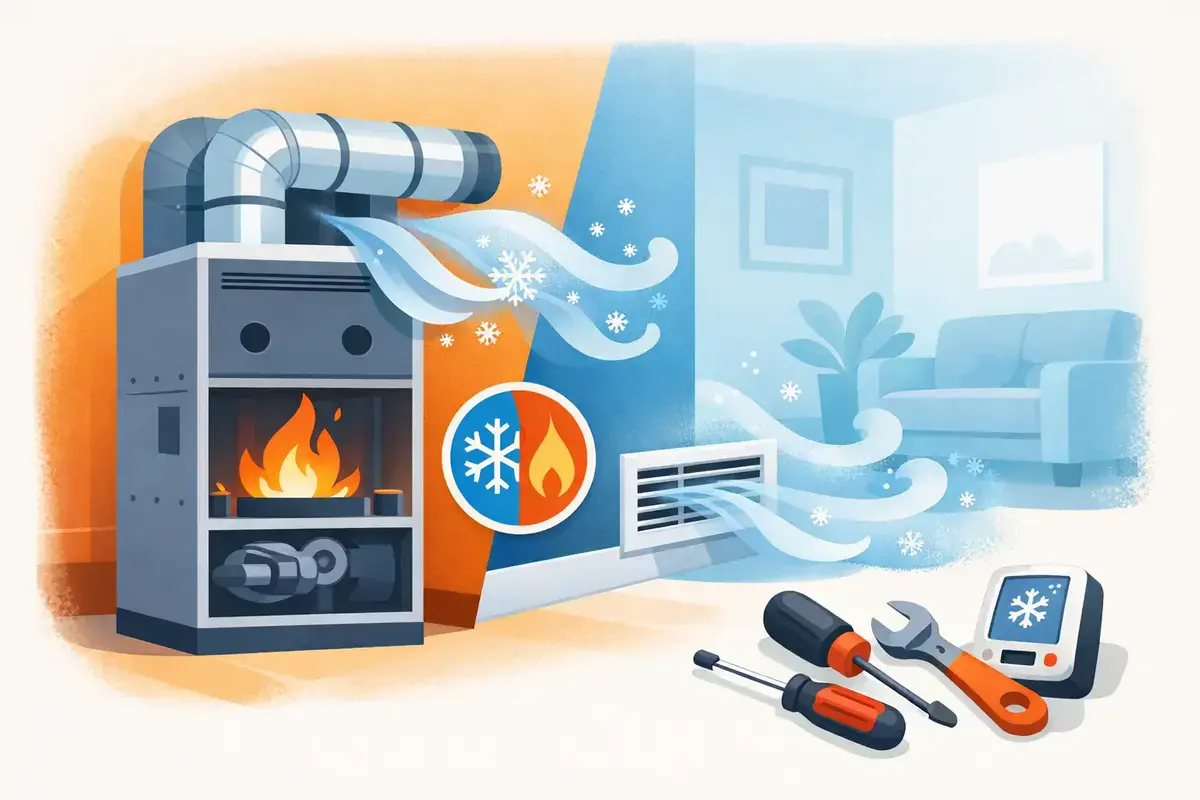
A North Texas cold snap has a way of exposing a heating problem quickly. If you are asking, “why is furnace blowing cold,” the blower may be working while the part of the system that creates heat is not. That distinction matters: cool air from the vents can be caused by a simple thermostat setting, but it can also point to a safety shutdown or a repair that should not wait.
Before resetting switches repeatedly or taking panels off your equipment, start with a few safe checks. If you smell gas, notice soot around the furnace, feel dizzy or nauseated, or a carbon monoxide alarm sounds, leave the building and contact emergency services and your gas utility from a safe location. Do not try to restart the furnace.
Start With the Simple Checks
Set the thermostat to Heat and raise the temperature at least 3 to 5 degrees above the current room temperature. Then check the fan setting. When the fan is set to On, it runs continuously, including during periods when the furnace is not producing heat. Set it to Auto so the fan runs only with a heating cycle.
Next, confirm that the furnace has power. A tripped breaker, a nearby service switch that was turned off, or an open furnace access panel can stop the heating sequence. If your thermostat screen is blank, replace its batteries if applicable and check the breaker before assuming the furnace has failed.
A dirty air filter is another common issue. Restricted airflow can cause the furnace to overheat and shut off its burners as a protective measure, while the blower may continue moving unheated air. If the filter looks gray, matted, or visibly dirty, replace it with the correct size and type. Avoid using an overly restrictive filter unless your HVAC system is designed for it.
These checks can solve minor issues, but they should not become a cycle of repeated resets. A furnace that keeps shutting down is telling you something needs attention.
Why Is Furnace Blowing Cold? Common Causes
The fan is running without a heating call
The thermostat fan setting is the easiest explanation, especially when the air feels room temperature rather than truly cold. A faulty thermostat can create the same symptom by failing to send the correct signal to the furnace. Wiring issues, incorrect programming, and a damaged thermostat relay can all leave the blower operating when the burners are off.
The furnace is overheating from poor airflow
Every forced-air furnace relies on steady airflow across its heat exchanger. A clogged filter, blocked return grille, closed supply vents, damaged ductwork, or a failing blower motor can reduce that airflow. The high-limit switch then shuts down the burners to prevent overheating.
This is why opening all supply registers and keeping return vents clear is more than a comfort issue. Closing too many vents can raise static pressure and contribute to short cycling. The trade-off is that some rooms may feel warmer than others, but restricting the system is not a reliable zoning strategy.
An ignition or flame-sensing problem is stopping the burners
Most modern gas furnaces do not use a standing pilot. They use an electronic igniter to light the burners, followed by a flame sensor that confirms combustion is present. If the igniter is worn, the gas valve does not open, or the flame sensor is dirty, the furnace may begin a heating cycle but shut down within seconds.
You may hear the furnace start, click, and then stop without feeling warm air. Many units will try this sequence several times before locking out. A technician can identify whether the issue is a flame sensor, igniter, gas valve, control board, or another part of the ignition sequence. Cleaning or replacing the wrong component can create a larger problem, so this is usually not a homeowner repair.
A gas supply or fuel issue is preventing ignition
Confirm that the gas service is active and that the furnace gas valve has not been accidentally turned off. If other gas appliances are also not working, the issue may involve the gas supply rather than the furnace itself.
Do not attempt to relight or bypass components on a modern furnace. If you suspect a gas issue or smell gas, treat it as an urgent safety concern. Combustion equipment needs professional diagnosis because a problem with fuel delivery, venting, or burner operation can affect both heat and indoor air safety.
A blocked condensate drain has triggered a shutdown
High-efficiency furnaces create condensation during normal operation. That water must drain properly. If the condensate line, trap, or drain switch is clogged, the furnace may shut down to prevent water damage or unsafe operation.
This problem is easy to overlook because it often appears only during extended heating use. A technician can clear the drain, confirm the trap is installed correctly, and check for related venting or pressure-switch problems.
The pressure switch or vent system is not proving safe operation
A furnace must safely move combustion gases out of the building before it can run. On high-efficiency systems, a pressure switch verifies that the inducer motor and venting system are working as intended. Obstructions, damaged vent piping, an inducer motor issue, or a failed pressure switch can prevent the burners from lighting.
Because this system protects against combustion-gas problems, it should never be bypassed. Cold air accompanied by error codes or repeated attempts to start is a good reason to schedule service promptly.
Duct problems are making warm air feel cold
Sometimes the furnace is producing heat, but the air arriving in a particular room is not warm enough. Leaky ducts in an attic, disconnected runs, poor insulation, or return-air leaks can pull cold air into the system. This is especially noticeable in rooms farthest from the furnace or in a commercial space with long duct runs.
A duct inspection can separate an equipment problem from an air-distribution problem. Repairing a loose connection or damaged section may improve comfort without replacing the furnace.
A control board, sensor, or blower component has failed
Modern furnaces use several safety switches and electronic controls. A failed control board, limit switch, rollout switch, blower relay, or motor can make the system behave inconsistently. For example, the burners may light normally but the blower may start at the wrong time, run too long, or fail to move sufficient air.
These faults require testing, not guesswork. Error codes can offer a useful clue, but the code identifies the condition the furnace detected, not always the part that caused it.
Do Not Confuse a Furnace With a Heat Pump Issue
Some Dallas-area homes use heat pumps, and their operation can feel different from a gas furnace. A heat pump produces air that is warmer than the outdoor temperature but often less hot at the register than furnace air. During defrost mode, it may briefly rely on auxiliary heat or pause normal heating.
If a heat pump is blowing genuinely cold air for an extended period, the cause could include low refrigerant, a defrost control issue, an outdoor-unit problem, or auxiliary heat that is not operating. The right diagnosis depends on the equipment type. Checking the thermostat’s system setting and identifying whether you have a furnace, heat pump, or dual-fuel system helps avoid an unnecessary repair visit or an incorrect repair recommendation.
What to Observe Before Calling for Service
A few details can help a technician narrow the problem quickly. Note whether the thermostat shows Heat, whether the blower runs continuously, whether you hear clicking or repeated startup attempts, and whether the furnace display has a blinking diagnostic light. Also note if the issue affects every vent or only one area of the building.
Do not remove the sealed combustion chamber, disconnect safety switches, or keep cycling power in an effort to force operation. One controlled reset after checking the thermostat, breaker, filter, and access panel is reasonable. If the furnace still blows cold air, turns on and off repeatedly, or displays a fault code, leave it off until it can be inspected.
When Cold Air Calls for Immediate Help
Call for prompt professional service when there is a gas odor, a carbon monoxide alarm, visible water around the furnace, burning smells, unusual banging, or a furnace that will not maintain a safe indoor temperature. Businesses should also act quickly when a heating failure could affect customers, employees, equipment, inventory, or frozen plumbing.
For an older system, repair versus replacement depends on more than the immediate part failure. Consider the furnace’s age, repair history, efficiency, condition of the heat exchanger, and whether the existing equipment is properly sized for the building. An honest evaluation should explain the repair option first when it is practical, along with replacement options when the system is becoming unreliable.
M.B. Kiser Heating and Air Conditioning has served Dallas-area homes and businesses since 1945, with technicians prepared to diagnose standard furnaces as well as more complex HVAC systems. When the heat should be on, a careful diagnosis is the fastest path back to dependable comfort.