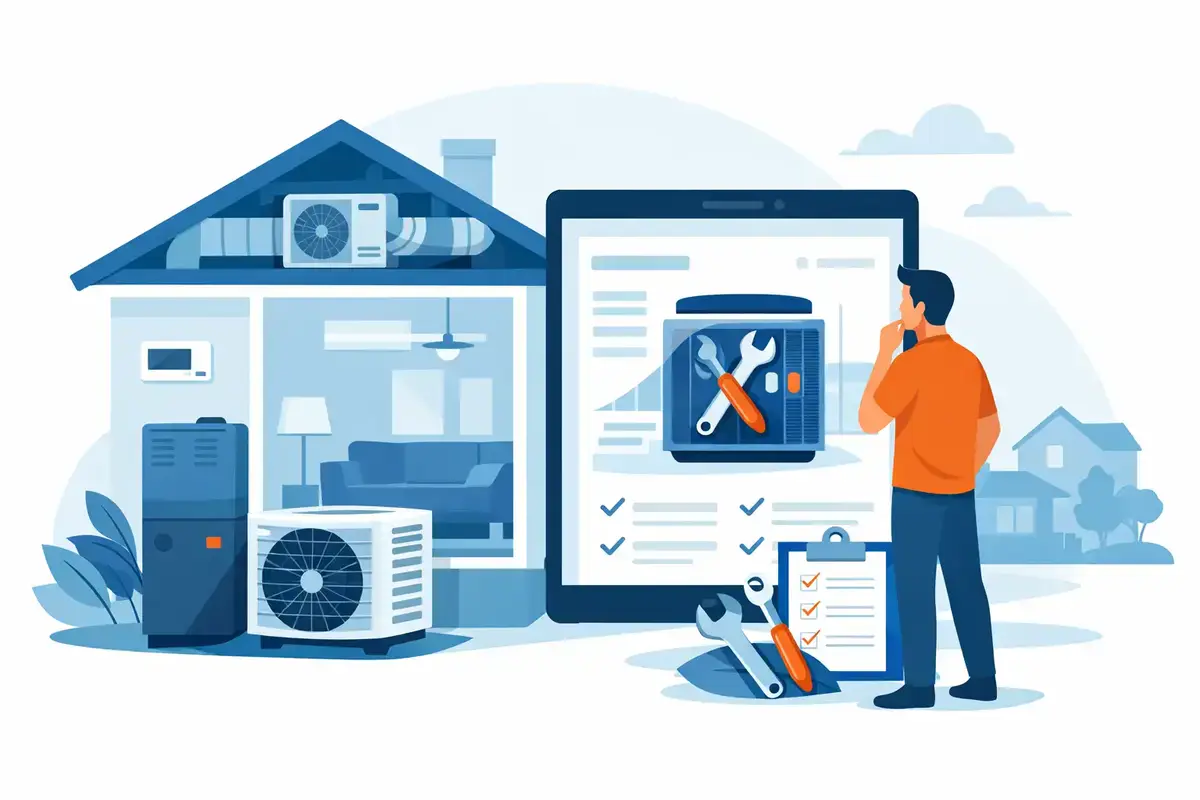
A failing air conditioner rarely picks a convenient week. It usually shows up in the middle of a Dallas summer, when the house will not cool evenly, the system runs all day, and every repair starts to feel like money poured into aging equipment. This homeowner guide HVAC replacement is built for that moment – when you need clear answers, not sales pressure.
Replacing a heating and cooling system is a major home decision, but it does not have to be a confusing one. The right choice depends on how your current equipment is performing, how long you expect to stay in the home, and whether the problem is truly the equipment itself or the ductwork, controls, or airflow. A good contractor should help you sort through those variables honestly.
When HVAC replacement makes sense
Most homeowners do not replace a system because of age alone. They replace it because the system has become unreliable, expensive to operate, or difficult to repair with confidence. Age matters, but age by itself is not the full story.
If your air conditioner or furnace is around 12 to 15 years old and repairs are becoming more frequent, replacement often deserves a serious look. That is especially true if comfort has declined. Hot rooms, weak airflow, rising utility bills, excess humidity, or noisy operation can all point to a system that is no longer delivering what the home needs.
There is also a difference between a repairable issue and a system that is wearing out across multiple components. A failed capacitor, contactor, or igniter is one thing. A leaking evaporator coil, failing compressor, repeated refrigerant issues, or a heat exchanger concern is another. When expensive parts begin stacking up, repair can become the more costly path over time.
For many homeowners, the tipping point is not one catastrophic breakdown. It is the pattern. If you find yourself wondering whether the system will make it through another season, that uncertainty has a cost too.
A homeowner guide HVAC replacement should start with diagnosis
Before anyone recommends new equipment, the first step should be a proper evaluation. That means looking at the full system, not just the outdoor unit. HVAC performance depends on how the indoor and outdoor equipment work together, how the duct system is sized and sealed, and how the home handles heat gain and airflow.
This is where experience matters. An oversized system may cool quickly but leave humidity behind. An undersized system may run constantly and still struggle to maintain temperature. Poor return air, duct leakage, insulation issues, and thermostat placement can all affect performance. In some homes, replacing equipment without addressing those underlying problems leads to disappointment.
That is why the best replacement recommendations are based on load calculations, equipment matching, and a realistic understanding of the house itself. A trustworthy contractor will explain what is failing, what can be repaired, and why replacement is or is not the better long-term decision.
What type of system should you replace it with?
For many homes, a central air conditioner and furnace remain the most practical setup. In others, a heat pump may offer strong year-round performance, especially when paired correctly with the home and climate. Ductless mini-splits can make sense in additions, converted garages, or homes with rooms that never seem to stay comfortable.
The right answer depends on more than brand preference. Efficiency ratings matter, but so does installation quality. A high-efficiency unit that is poorly sized or improperly installed will not perform the way it should. On the other hand, a well-installed mid-range system can deliver dependable comfort for years.
Homeowners should also think about how they use the house. If someone is home throughout the day, variable-speed equipment may improve comfort and humidity control enough to justify the investment. If the home is a rental or you plan to move in a few years, a simpler system may make more financial sense. There is no universal best option. There is only the best fit for your property, budget, and comfort priorities.
Efficiency matters, but comfort matters too
It is easy to focus on SEER ratings and potential energy savings, and those numbers do matter. But most homeowners feel the results of replacement in comfort first. More even temperatures, quieter operation, better humidity control, and fewer hot spots are often the biggest day-to-day improvements.
In North Texas, humidity control is especially important. A system that short cycles can leave the home cool but clammy. Proper sizing and airflow setup help prevent that. Features such as variable-speed blowers and staged cooling can improve comfort noticeably, but they should be recommended for a reason, not just because they are available.
Think of efficiency as one part of the value equation. Lower operating costs are important, but reliability, repairability, indoor comfort, and installation quality all deserve equal attention.
What affects HVAC replacement cost?
Homeowners often ask for a quick number, but replacement cost varies because homes vary. The size of the system, the efficiency level, the condition of the ductwork, electrical updates, drain modifications, filtration upgrades, and code requirements can all affect the final scope.
Accessibility matters too. Replacing equipment in a tight attic is different from replacing a garage-mounted system. Older homes may need additional adjustments to bring the installation up to current standards. In some cases, what looked like a straightforward equipment change turns into a larger correction of airflow or drainage problems that have been affecting the home for years.
That is why the lowest bid is not always the best value. If one proposal includes duct corrections, proper commissioning, new safety components, and matched equipment, while another simply swaps boxes, those are not the same job. The real comparison is not price alone. It is scope, quality, warranty support, and confidence that the system will perform as promised.
Questions worth asking before you sign
A good replacement proposal should leave you with fewer doubts, not more. Ask how the equipment was sized. Ask whether the existing duct system was inspected. Ask what parts of the installation are new and what remains in place. Ask how startup, testing, and airflow verification will be handled.
You should also ask about warranty details and ongoing maintenance. New systems still need regular service to protect performance and longevity. A maintenance agreement can be worthwhile if it helps catch small issues early and keeps the manufacturer requirements for service on track.
For homeowners in older Dallas neighborhoods, it is also smart to ask whether the installer has experience with legacy homes, tight mechanical spaces, and comfort issues common to houses that were built long before modern HVAC standards. Local experience can make a measurable difference.
Repair or replace? Sometimes it depends
Not every older system should be replaced immediately. If a repair is minor, the equipment has been maintained well, and the home is still comfortable, repair may be the sensible move. There is no benefit in replacing a system prematurely just because it crossed an age threshold.
But waiting too long has risks. Emergency replacement during extreme weather often compresses the decision-making process. Homeowners may have less time to compare options, schedule around family needs, or think through efficiency and comfort priorities. Planned replacement usually gives you more control than crisis replacement.
A practical rule is to look at the full picture. Consider the age of the system, the cost of the current repair, the pattern of past repairs, your utility bills, and how well the home is actually being conditioned. That conversation should feel balanced. If a contractor cannot explain both the case for repair and the case for replacement, you probably are not getting the level of guidance you need.
Choosing the company matters as much as the equipment
HVAC replacement is not a boxed product. It is a design and installation service. The same model of equipment can perform very differently depending on who installs it, how carefully they set it up, and whether they take the time to address the full system.
That is one reason many homeowners prefer an established contractor with a long track record in the area. Companies that have been serving Dallas families for decades tend to understand what local homes need, how systems hold up in North Texas heat, and how to stand behind the work after installation day. M.B. Kiser has built that kind of trust by combining technical experience with straightforward recommendations.
When you are comparing contractors, pay attention to how they communicate. Clear explanations, realistic options, and honest answers are usually a better sign than a polished sales pitch. You are not just buying new equipment. You are choosing who will be responsible for your comfort when the weather is at its worst.
If your current system is showing its age, the best next step is not to rush. It is to get a thorough evaluation, ask the right questions, and make a decision based on the condition of the whole system. A well-planned replacement should leave you with more than a new unit. It should leave you with confidence every time the thermostat calls for heating or cooling.