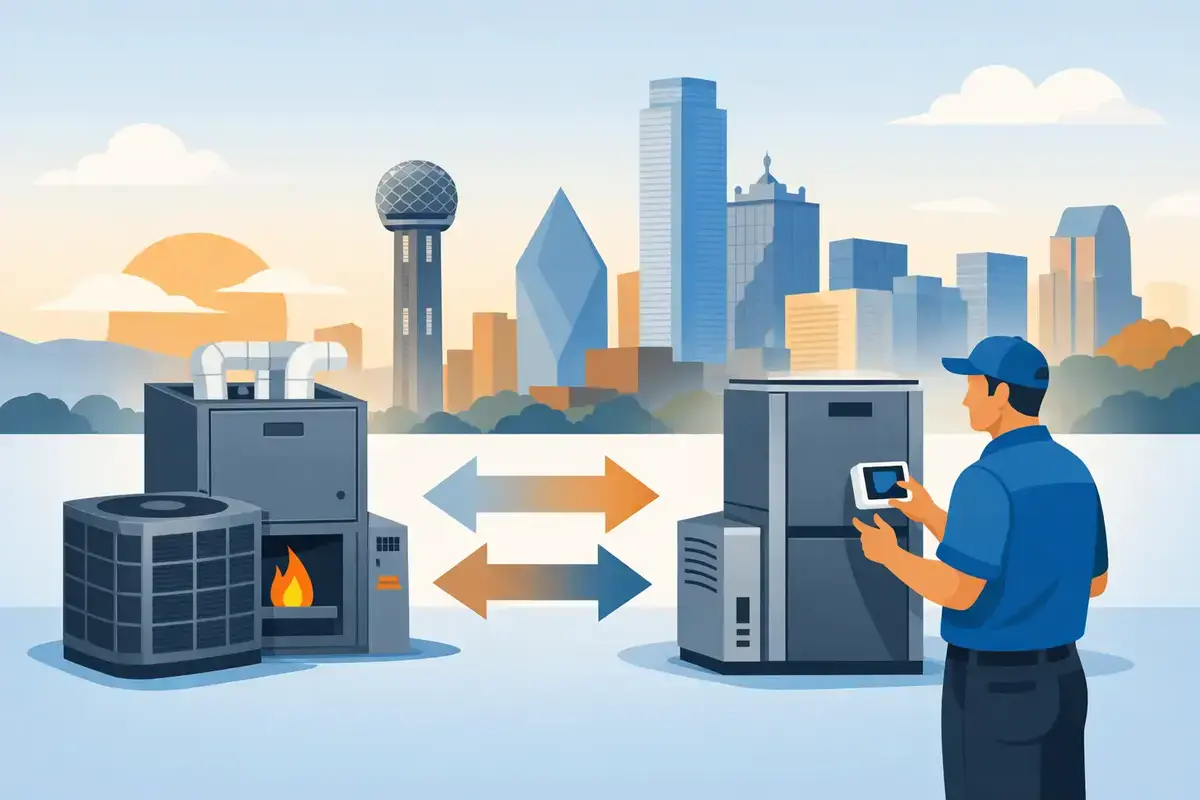
A furnace that starts making new noises on the first cold night, heats some rooms but not others, or needs another major repair puts homeowners in a difficult spot. This guide to furnace replacement options is designed to make that decision more practical. The right answer is not always the highest-efficiency model or the lowest initial price. It is the system that fits your home, fuel availability, comfort expectations, and long-term plans.
For Dallas-area homes, furnace decisions also need to account for our cooling-heavy climate. Your heating equipment works with the air handler, blower, ductwork, thermostat, and often the outdoor AC or heat pump system. A replacement should be evaluated as part of the complete comfort system, not as an isolated box in the attic or closet.
When Replacement Makes More Sense Than Repair
A qualified technician should diagnose a furnace before recommending replacement. Many issues, including failed igniters, worn capacitors, dirty flame sensors, and thermostat problems, can be repaired reliably. A well-maintained furnace may provide years of additional service.
Replacement becomes more reasonable when repairs are frequent, costly, or tied to major components. A cracked heat exchanger is a serious safety concern and often changes the conversation quickly. An older furnace with a failing blower motor, control board, or combustion-related issue may also be a poor candidate for another substantial investment, especially if parts are difficult to obtain.
Age matters, but it is not the only measure. Many furnaces last roughly 15 to 20 years with proper maintenance. A 12-year-old unit that has been dependable may deserve a repair, while a younger system with repeated problems, improper sizing, or poor installation may not. Consider repair history, expected repair cost, warranty coverage, operating performance, and how long you expect to own the property.
Guide to Furnace Replacement Options for Dallas Homes
Most North Texas homes use natural gas furnaces, but there are several replacement paths. The best choice depends on your existing infrastructure and whether you are replacing only the furnace or planning improvements to the entire heating and cooling system.
Natural Gas Furnaces
Natural gas furnaces remain a common and dependable choice for homes with existing gas service. They provide fast, comfortable heat and can work well during the occasional hard freeze that Dallas and surrounding communities experience.
Gas furnaces are rated by Annual Fuel Utilization Efficiency, or AFUE. An 80% AFUE furnace converts approximately 80% of its fuel into usable heat, while a 95% or higher model captures more heat before venting combustion gases outside. Higher-efficiency equipment can reduce gas consumption, but its added cost and venting requirements should be considered carefully.
For many Dallas homes, an 80% furnace can be a sensible, cost-conscious solution because heating seasons are relatively short. A high-efficiency furnace may make more sense for homeowners who prioritize lower fuel use, want premium comfort features, or plan to stay in the home for many years. Installation details matter: condensing furnaces require appropriate PVC venting and a condensate drain, which may affect feasibility and cost.
Single-Stage, Two-Stage, and Variable-Speed Equipment
A single-stage furnace operates at full capacity whenever it calls for heat. It is straightforward, dependable, and often less expensive upfront. It can be a solid fit for smaller homes, rental properties, or homeowners who want a basic replacement without unnecessary features.
A two-stage furnace can operate at a lower output during milder weather and shift to high output when demand rises. This tends to provide longer, quieter heating cycles and more even room temperatures. Because Dallas winters often include moderate temperatures, two-stage operation can be particularly useful for reducing the on-and-off feeling common with oversized or basic systems.
Variable-speed blowers are another comfort upgrade. Rather than running at one fixed speed, they adjust airflow more gradually. That can improve temperature consistency, reduce noise, support better filtration, and help the air conditioner manage indoor humidity during the long cooling season. The furnace may be replaced for heating needs, but the blower can influence comfort throughout the year.
Electric Furnaces and Air Handlers
Electric furnaces and electric air handlers use electric resistance heat instead of gas combustion. They may be appropriate where gas is unavailable or where a property already has an all-electric design. They are generally simpler from a venting and combustion standpoint, but resistance heat can be more expensive to operate than natural gas or a heat pump.
An electric air handler is often paired with a heat pump. For certain homes, especially those without gas service, that combination can offer a more efficient all-electric approach. The property’s electrical capacity, panel condition, duct system, and winter comfort needs should all be evaluated before making a change.
Heat Pumps and Dual-Fuel Systems
A heat pump does not create heat by burning fuel. It transfers heat from outdoor air into the home during winter and reverses direction to cool the home in summer. Because Dallas has a long cooling season and many mild winter days, a heat pump can be a strong option for homeowners replacing aging heating and cooling equipment together.
A dual-fuel system combines a heat pump with a gas furnace. The heat pump handles heating during milder weather, while the furnace takes over when outdoor temperatures fall enough that gas heat becomes the better choice. This option can provide efficient year-round operation and reliable heat during cold snaps, although it costs more upfront and requires proper controls to switch between fuel sources at the right time.
The decision between a new furnace and a heat pump is not purely about fuel cost. It also depends on the condition of your existing air conditioner, the age of the indoor coil, available rebates or incentives, electrical considerations, and your preferred balance of upfront investment and long-term operating cost.
Correct Sizing Is More Important Than Bigger Equipment
An oversized furnace can heat the home too quickly, leading to short cycles, uneven temperatures, extra wear, and reduced comfort. An undersized furnace may run continuously during cold weather and still fail to maintain the thermostat setting. Neither outcome is acceptable.
A proper replacement starts with a load calculation that considers square footage, insulation, windows, ceiling height, air leakage, orientation, and other characteristics of the home. Existing equipment size is useful information, but it is not proof that the original system was correctly sized. Renovations, new windows, attic insulation, and additions can change a home’s heating requirements significantly.
The duct system deserves the same attention. Restricted return air, undersized ducts, leaking connections, or poor airflow can make even premium equipment perform poorly. Before installation, ask whether airflow and duct conditions will be checked. This is especially important in older Dallas homes where ductwork may have been modified over decades.
Compare the Full Installation Scope
Furnace proposals can look similar while covering very different work. A trustworthy estimate should identify the equipment being installed, efficiency rating, warranty terms, and the materials or modifications needed for a safe installation. If the furnace is in an attic, that may include drain protection, venting changes, electrical work, platform improvements, or access considerations.
If the air conditioner is older, ask whether the furnace blower, evaporator coil, refrigerant system, and thermostat are compatible with the proposed equipment. Replacing a furnace alone can be appropriate, but mismatched components can limit efficiency, comfort, and future replacement choices. The goal is not to replace equipment that still has useful life. It is to avoid a decision that creates preventable problems later.
For commercial properties, the evaluation may be broader. Warehouse heaters, rooftop packaged units, ventilation requirements, controls, occupancy schedules, and tenant comfort all affect the right replacement plan. A light commercial system should be assessed for capacity, airflow, safety, and operating demands rather than selected from a residential-style rule of thumb.
Questions Worth Asking Before You Approve a Replacement
A good contractor should be comfortable answering direct questions. Ask why replacement is recommended instead of repair, how the system was sized, what efficiency level is appropriate for your situation, and whether ductwork or airflow changes are needed. You should also understand the manufacturer warranty, labor warranty, maintenance requirements, and any expected changes to utility use.
Pay attention to the explanation, not just the price. A low quote can leave out necessary electrical, venting, drainage, or duct improvements. A higher quote is not automatically better either. The value is in a clear scope of work, correctly selected equipment, skilled installation, and service support after the installation is complete.
M.B. Kiser Heating and Air Conditioning has served Dallas customers since 1945, and that experience matters when a replacement decision involves more than swapping one furnace for another. A careful evaluation helps protect your comfort, your home, and your investment.
Before the next cold front turns a small furnace problem into an urgent one, schedule an assessment and keep the conversation focused on fit, safety, and dependable performance for the years ahead.