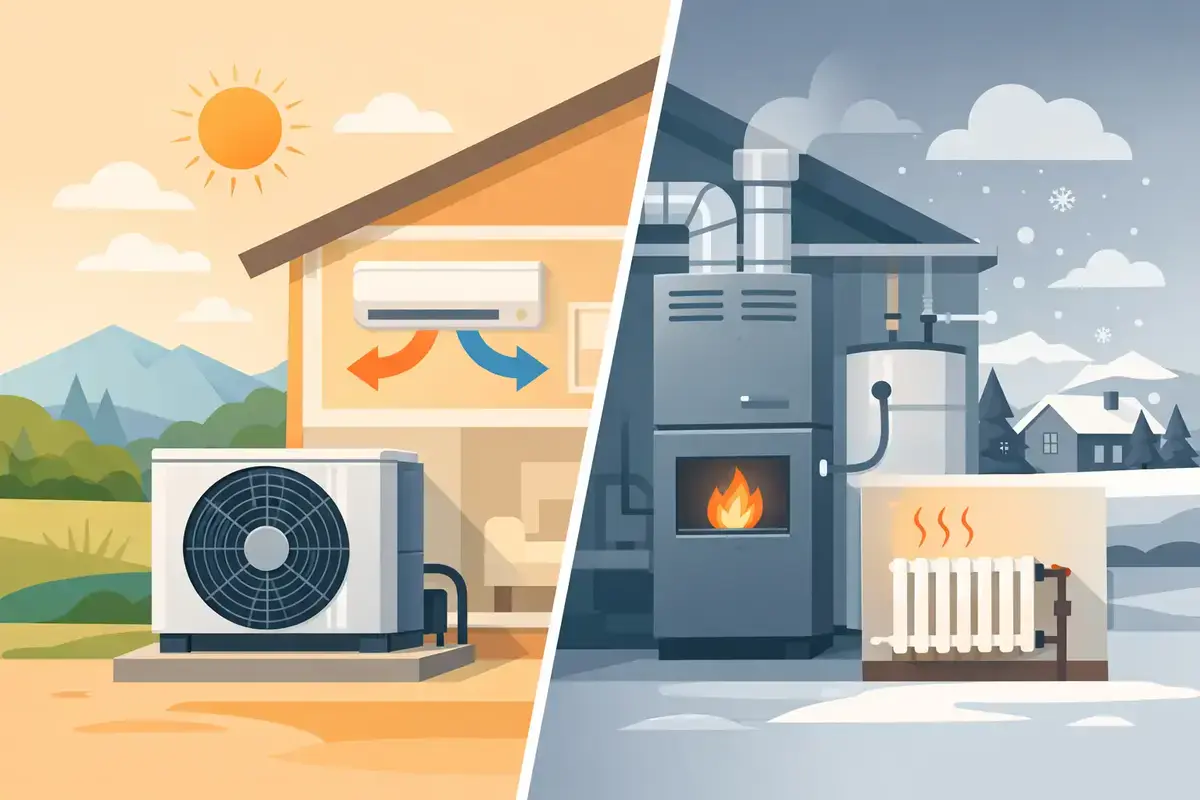
If your heating system is aging out, the question usually is not just what broke. It is whether replacing it with the same type of equipment still makes sense. When homeowners compare heat pump versus furnace options, they are really deciding how they want their building to heat, cool, and handle North Texas weather over the next 10 to 15 years.
That decision deserves more than a quick price quote. The right answer depends on your utility setup, the condition of your ductwork, how long you plan to stay in the property, and how sensitive you are to monthly operating costs. In Dallas-area homes and light commercial spaces, both systems can be the right fit. The difference is knowing where each one performs best.
Heat pump versus furnace: the core difference
A furnace creates heat. In most homes, that means burning natural gas and moving warmed air through the duct system. An electric furnace exists too, but in this market, gas furnaces are the more common comparison.
A heat pump works differently. It does not create heat by combustion. It moves heat from one place to another. In cooling season, it removes heat from indoors just like an air conditioner. In heating season, it pulls available heat from outdoor air and brings it inside.
That difference matters because a heat pump is a two-in-one system. It handles both heating and cooling. A furnace does only the heating, so it must be paired with an air conditioner if you want year-round indoor comfort.
Why climate changes the answer
In North Texas, climate is a major part of the recommendation. Our winters are generally mild compared with northern states. That gives heat pumps a real advantage because they perform especially well in moderate winter conditions.
A heat pump can be highly efficient during much of the heating season in Dallas, Plano, Irving, and surrounding communities because it is transferring heat rather than generating it through combustion. When temperatures stay above the more extreme cold range, that efficiency can translate into lower heating costs, depending on your electric and gas rates.
A furnace still has strengths here, especially during hard cold snaps. Gas furnaces deliver strong, immediate heat, and many homeowners prefer that warmer supply air on the coldest mornings. If a building has high heat loss, older insulation, draft issues, or large glass areas, a furnace may feel more satisfying in winter.
So the local climate does not make the choice automatic. It simply shifts the balance. In North Texas, heat pumps deserve serious consideration in a way they might not in colder climates.
Operating cost is not the same as purchase price
One of the biggest mistakes property owners make is focusing only on installation cost. Upfront price matters, but it should not be the only factor.
A furnace paired with an AC system may be familiar and, in some cases, cost-effective depending on the equipment selected. But a heat pump combines heating and cooling in one matched system, which can change the math. In a replacement scenario, especially if both heating and cooling equipment are due, a heat pump may compare favorably.
Then there is the question of monthly utility cost. A gas furnace may have lower operating costs in some homes if natural gas prices are favorable. In other cases, a modern heat pump can be less expensive to run over much of the season. The answer depends on equipment efficiency, insulation levels, thermostat settings, and local utility rates.
That is why broad claims like heat pumps are always cheaper or furnaces always save money usually fall apart once a real load calculation and utility comparison are done.
Comfort feels different with each system
This is where personal preference matters more than many people expect.
A furnace typically produces hotter supply air. When it starts a cycle, the air coming from the vents often feels distinctly warm. Many homeowners associate that with comfort because it creates a fast response when indoor temperatures drop.
A heat pump usually delivers gentler heat. The supply air may feel warm, but not as hot as furnace air. The system often runs longer and more steadily to maintain temperature. Some people like that more even operation. Others interpret it as the house not heating as strongly, even when the indoor temperature is correct.
For commercial spaces, the same principle applies. If a business needs steady comfort throughout occupied hours, a properly sized heat pump can do that well. If the space has doors opening often, high ceilings, or intermittent use patterns, furnace heating may better match the demand.
The ductwork and electrical setup matter more than people think
Equipment choice should never be made in isolation. The existing infrastructure in the building can push the answer one way or the other.
If a property already has natural gas service, a furnace replacement can be straightforward. If the gas line, venting, and air distribution system are all in good shape, replacing with another furnace may be the practical path.
If the building does not have gas available, or if the owner wants to reduce gas appliance use, a heat pump becomes more attractive. In some homes, electrical capacity, duct sizing, airflow limitations, or poor duct condition can affect either option. A high-efficiency system installed on undersized or leaking ducts will not perform the way it should.
This is one reason experienced HVAC contractors look at the whole system instead of only the box in the closet or attic. Good recommendations come from load calculations, duct inspection, and understanding how the building actually performs.
Heat pump versus furnace for reliability and maintenance
Both systems can be dependable when they are properly installed and maintained. Both can also become expensive problems when they are oversized, neglected, or poorly matched to the structure.
A gas furnace includes burners, a heat exchanger, ignition components, and venting considerations. That means annual maintenance is about more than efficiency. It is also about safe operation.
A heat pump avoids combustion, but it runs in both summer and winter. Because it serves year-round, maintenance is still critical. Coils, refrigerant charge, defrost controls, and airflow all need attention. The outdoor unit also works during heating season, which some owners do not expect.
From a service standpoint, neither system is maintenance-free. The better question is whether you have a contractor who can keep the equipment tuned, catch small issues early, and give you a straight answer about repair versus replacement.
When a heat pump makes the most sense
A heat pump is often a strong choice when you want one system for both heating and cooling, your winter climate is relatively moderate, and efficiency is a top concern. It can also make sense for all-electric homes, additions, renovated spaces, and owners who prefer a modern high-efficiency setup.
It is especially appealing when the existing AC and heating system are both due for replacement. Instead of thinking about heating and cooling as separate purchases, you can evaluate the house as one comfort system.
For many North Texas homes, that is a practical conversation, not a trend. With proper sizing and installation, heat pumps can provide reliable comfort through most of the local heating season.
When a furnace is still the better fit
A furnace can be the better answer when you want strong heat output during cold weather, already have dependable natural gas service, or prefer the feel of hotter air from the registers. It also fits well in homes with higher winter heat demands or in properties where the owner wants to keep a conventional gas heat and AC arrangement.
In some buildings, a dual-fuel setup is worth discussing too. That combines a heat pump with a gas furnace, allowing the system to use the heat pump in milder weather and switch to furnace heat when temperatures drop. It is not right for every project, but it can be an excellent middle ground when comfort and efficiency both matter.
The best choice is the one that fits the property
There is no universal winner in the heat pump versus furnace debate. There is only the system that fits the building, the budget, and the way you expect the space to perform.
That is why experienced contractors do not give the same answer to every customer. A newer, tighter home in the Dallas area may benefit greatly from a heat pump. An older home with significant heat loss or a business with heavy winter heating demands may be better served by a furnace. In many cases, the right recommendation comes down to how all the pieces work together, from insulation and ducts to occupancy patterns and utility costs.
For a decision this important, a rushed estimate is rarely enough. A careful evaluation now usually saves frustration later, and the best heating system is the one you do not have to second-guess every time the temperature drops.