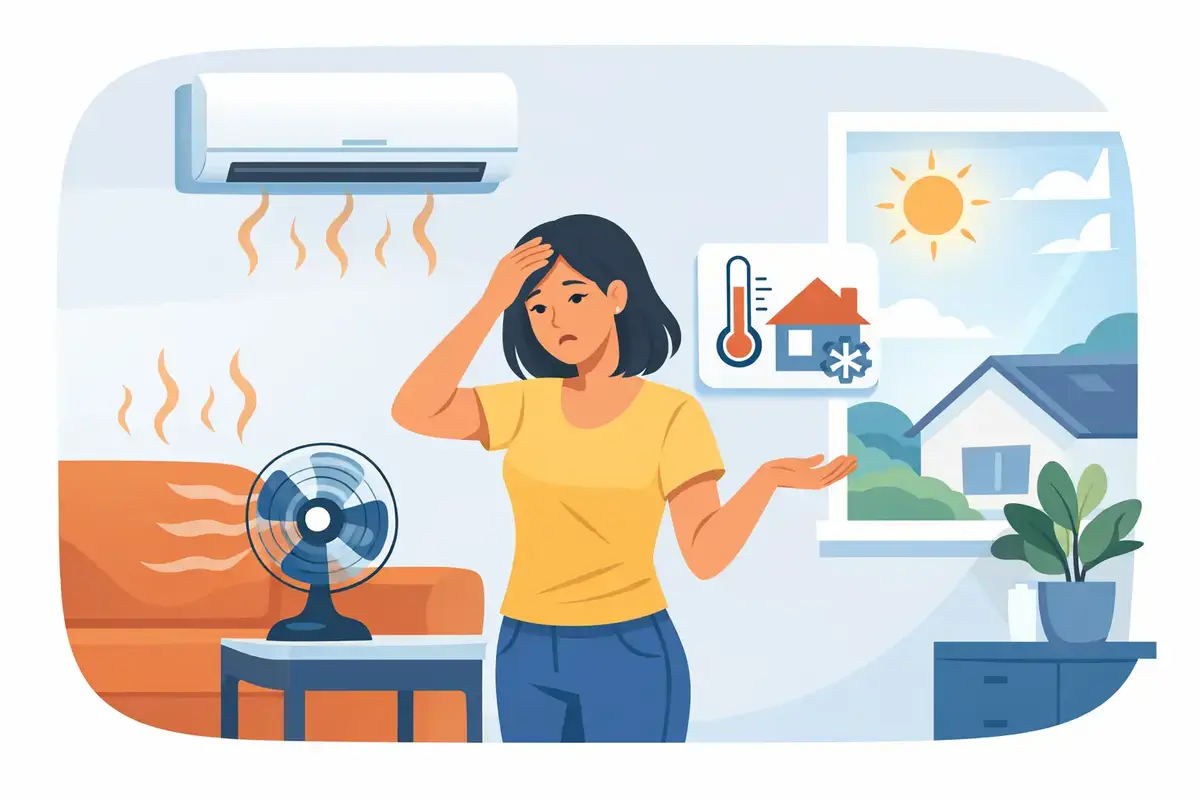
You notice it first in the late afternoon. The thermostat says 72, but the living room feels sticky, the upstairs is worse, and your AC seems to run without ever catching up. If your air conditioner is not cooling house comfort the way it should, the problem may be simple, or it may be an early sign of a system issue that needs professional attention.
In North Texas, that distinction matters. A small airflow problem can turn into a frozen coil, a compressor issue, or a full system breakdown when the heat stays relentless for days at a time. The sooner you know what you are dealing with, the better your chances of avoiding a more expensive repair.
Why an air conditioner is not cooling the house
An AC system does not cool your home by simply blowing cold air. It has to move enough air, remove heat effectively, and do it consistently across the entire house. When one part of that process starts to fail, performance drops fast.
Sometimes the issue is minor, like a clogged filter restricting airflow. Sometimes it is more technical, such as low refrigerant, a failing capacitor, a dirty evaporator coil, leaking ductwork, or a thermostat that is not reading the space correctly. In older homes around Dallas, Irving, and University Park, we also see comfort issues tied to aging duct systems, undersized returns, and equipment that was never matched properly to the home.
That is why two houses with the same complaint can need very different solutions. One may need a maintenance visit and coil cleaning. Another may need diagnostic testing, duct repair, or a replacement recommendation based on system age and operating condition.
What to check first when your air conditioner is not cooling house comfort
Before assuming the worst, there are a few things worth checking. Start with the thermostat. Make sure it is set to cool, the temperature setting is below the room temperature, and the fan is set to auto rather than on if you are trying to judge actual cooling performance. A fan set to on can keep circulating air even when the system is not actively cooling, which can make the home feel warmer and more humid.
Next, check the air filter. A dirty filter is one of the most common reasons cooling drops off. When airflow is restricted, your system cannot move enough air over the indoor coil. That can reduce efficiency, lower comfort, and in some cases lead to coil icing. If the filter looks loaded with dust or has not been changed in a while, replace it and give the system some time to recover.
Then go outside and look at the condensing unit. If the outdoor coil is packed with cottonwood, grass, dirt, or debris, the system may struggle to reject heat. You should also listen for anything unusual. Loud buzzing, clicking, hard starts, or a unit that hums without running are all signs that it is time for service.
Finally, check your supply vents and return grilles. Closed vents, blocked returns, and furniture pushed against airflow paths can create uneven cooling and make the system work harder than necessary. This will not fix every problem, but it can eliminate a few easy ones.
Common reasons your AC runs but does not cool well
One of the most frequent service calls we see is a system that runs continuously but cannot bring the indoor temperature down. In many cases, the problem is airflow. Dirty filters, blower issues, duct leaks, and clogged coils can all keep conditioned air from reaching the rooms that need it.
Refrigerant problems are another common cause. If refrigerant is low, there is usually a leak somewhere in the system. Topping it off without finding the leak is not a real fix. The unit may cool temporarily, but the underlying problem remains, and the system can suffer more damage over time.
Electrical components can also cause weak cooling. A failing capacitor, contactor, or fan motor may let the system run partway but not at full performance. In those cases, homeowners often describe the unit as sounding normal enough, yet the house never gets comfortable.
There is also the question of system size and age. If an older unit was marginal to begin with, a Dallas summer can expose every weakness. A system that once kept up in moderate weather may no longer have the capacity or efficiency to handle peak demand. That does not always mean replacement is the only answer, but it does mean a proper evaluation matters.
When the problem is not the AC unit itself
Not every cooling complaint comes from the equipment. The house can be part of the issue.
Poor insulation, solar heat gain, leaky windows, inadequate attic ventilation, and damaged ductwork can all make a working system look like it is failing. This is especially common when one floor stays warm, certain rooms are always uncomfortable, or comfort drops sharply in the afternoon sun.
Duct leakage is a major factor in many homes. If cooled air is escaping into the attic or crawl space, your system may run longer without delivering the comfort you are paying for. Return-side leaks can be just as problematic because they pull hot, dusty air into the system and reduce overall performance.
Thermostat placement matters too. If the thermostat sits near a warm window, in direct sun, or in a section of the home that cools faster than the rest, it may not reflect actual conditions throughout the house. That can lead to short cycling in one scenario or extended run times in another.
Signs you should call for professional AC repair
If you have changed the filter, checked the thermostat, and made sure vents are open, but your home is still not cooling properly, it is time for a trained technician to inspect the system. The same is true if you notice ice on the indoor line, water around the air handler, burning smells, tripped breakers, or sudden spikes in your electric bill.
Another clear sign is humidity. Even when the temperature seems close to normal, a system that is not removing moisture properly can leave the house feeling uncomfortable and clammy. That may point to airflow issues, oversized equipment, control problems, or a system that is simply not operating as designed.
For commercial spaces, the urgency is often higher. Warm offices, retail areas, or service environments can affect employees, customers, and equipment. Fast diagnostics matter because partial cooling loss can quickly become a full outage under heavy demand.
A professional evaluation should go beyond a quick look. Proper service includes checking refrigerant pressures, inspecting coils, verifying electrical performance, testing capacitors and motors, examining drains, evaluating airflow, and assessing duct and thermostat operation where needed. Honest diagnostics save time and prevent repeat problems.
Repair or replacement depends on the full picture
Homeowners often want a simple answer here, but the right decision depends on age, repair history, efficiency, refrigerant type, and overall condition. If the issue is isolated and the system is otherwise sound, repair is usually the practical choice.
If the unit is older, uses outdated refrigerant, has recurring breakdowns, or cannot cool the house evenly even after repairs, replacement may be the better long-term investment. That is particularly true when repair costs begin stacking up while comfort keeps falling short.
A trustworthy contractor should not push replacement when repair makes sense. At the same time, they should be candid when a new system would deliver better reliability, lower operating cost, and improved comfort. In our market, where summer heat is not forgiving, that honesty matters.
The best way to prevent cooling problems
Most no-cooling or poor-cooling calls do not come out of nowhere. Systems usually show warning signs first. Longer run times, weaker airflow, higher humidity, more dust, and warmer rooms are all clues that something is changing.
Routine maintenance helps catch those issues before they turn into breakdowns. Cleaning coils, checking refrigerant levels, testing components, tightening electrical connections, inspecting drains, and confirming airflow can extend equipment life and improve day-to-day performance. It also gives you a clearer picture of whether your current system is ready for another North Texas summer.
For homeowners and property owners who value dependable service, experienced diagnostics make all the difference. Companies with a long track record in Dallas, such as M.B. Kiser Heating and Air Conditioning Co. Inc., understand how local climate, home construction, and system design affect real-world comfort.
When your AC is running but the house still feels hot, the goal is not just to get cold air blowing again. The goal is to solve the actual problem, protect the equipment, and restore the comfort your home or building should have. If something feels off, trust that instinct and get it checked before a frustrating cooling issue turns into a midsummer emergency.