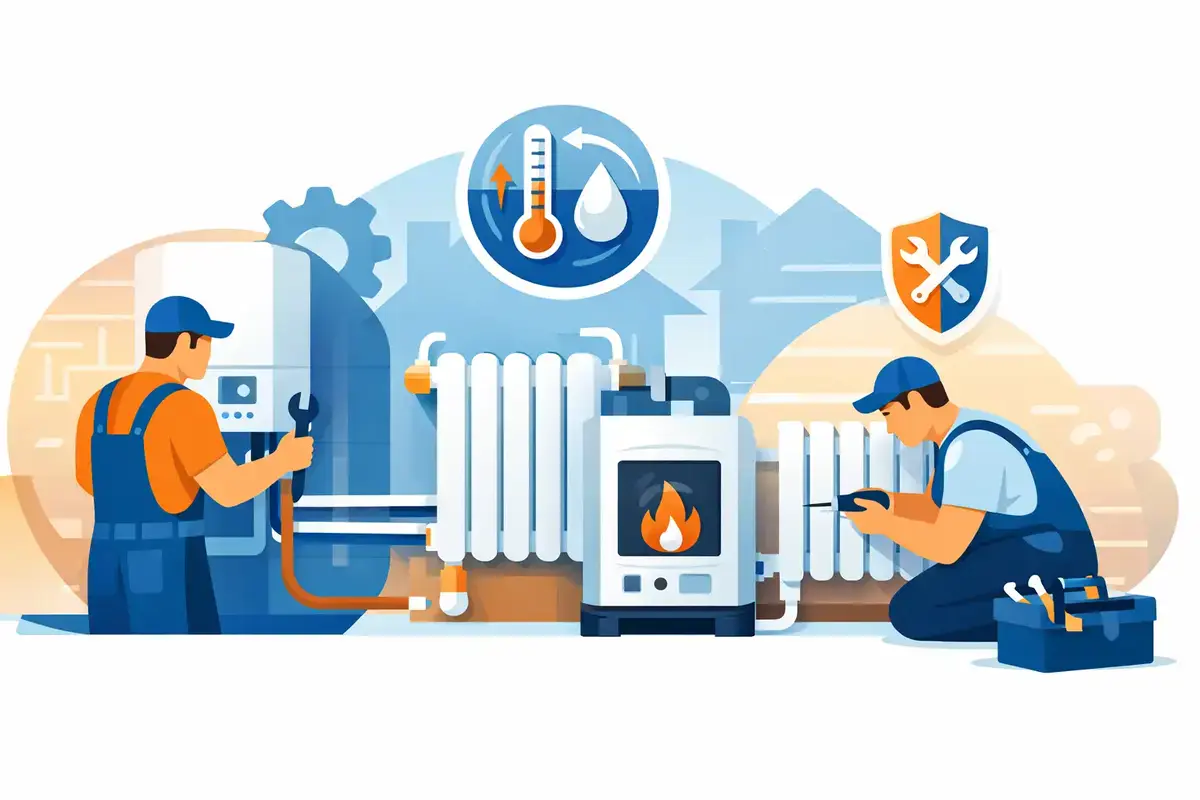
A heating system usually tells you what it needs before it fails completely. Maybe certain rooms stay cold, the furnace starts making a new rattling sound, or utility bills climb even though your thermostat settings have not changed. That is where central heating installation maintenance repair becomes more than a service category – it becomes a practical decision about comfort, safety, operating cost, and how much risk you are willing to carry into the next cold snap.
For homeowners and property managers, the hardest part is rarely recognizing that something is wrong. The hard part is knowing whether the right move is a repair, a maintenance visit, or a full system replacement. The answer depends on the age of the equipment, the type of problem, how the system was installed, and whether the unit has been maintained consistently over time.
Why central heating installation maintenance repair has to be looked at together
Installation, maintenance, and repair are often treated as separate issues, but in real buildings they are closely connected. A properly installed system tends to run more efficiently, heat more evenly, and experience fewer major failures. A poorly installed system can create years of unnecessary service calls, airflow issues, short cycling, and uneven temperatures.
Maintenance plays a different role. It does not prevent every breakdown, but it gives technicians the chance to catch worn parts, dirty burners, ignition issues, airflow restrictions, and safety concerns before they turn into expensive repairs. In many cases, what looks like an urgent failure started as a minor issue that developed over one or two seasons.
Repair is the point where those earlier choices show up in real terms. A well-installed and regularly maintained furnace may only need a straightforward part replacement after years of reliable use. An older system with deferred upkeep may need repeated repairs that no longer make financial sense.
When repair makes sense
A repair is usually the right call when the system is still within a reasonable service life, the heat exchanger and core components are in good shape, and the issue is isolated. Common examples include ignition problems, failed capacitors, worn motors, thermostat malfunctions, or blocked drainage and airflow issues. These can often be corrected without replacing the full system.
Repair also makes sense when the equipment has been dependable overall. If a system has delivered consistent heating and the current problem is the first significant issue in years, repairing it may be the most cost-effective choice.
What matters is not just the immediate repair cost. It is the larger pattern. If the unit is asking for one major repair after another, or if parts are becoming harder to source, you may be putting money into a system that is close to the end of its practical life.
For commercial properties, downtime also changes the equation. A business may decide to replace equipment sooner than a homeowner would because losing heat affects staff, customers, tenants, or operations. That is why the right recommendation should account for how the building is used, not just what part failed.
When maintenance is the smarter investment
Routine service is less dramatic than an emergency repair, but it often has the biggest effect on long-term performance. Heating systems collect dust, develop airflow restrictions, and experience normal wear on electrical and mechanical components. Left alone, those small issues can reduce efficiency and place extra strain on the equipment.
Seasonal maintenance is especially valuable before heavy winter use. A technician can inspect burners, safeties, electrical connections, filters, blower components, and thermostat operation while also checking for signs of carbon monoxide risk or venting concerns. In North Texas, where heating systems may sit unused for long stretches and then be expected to perform immediately during a freeze, that preseason check matters.
Maintenance is also about consistency. A system that starts every morning, heats evenly, and runs without unusual noise is easier to live with and easier to budget for. That predictability is one reason many long-term property owners choose service agreements. They are not just paying for a tune-up. They are reducing the chances of surprise failures when the weather turns.
When central heating installation is the better answer
At some point, replacing the system becomes more sensible than extending it. That point comes sooner if the equipment was undersized, oversized, or installed incorrectly from the start. It can also come when repairs are piling up or when comfort problems have never really gone away.
A new installation should begin with proper load calculations and a realistic look at the building. Bigger is not automatically better. An oversized furnace can cycle too quickly, which affects efficiency and comfort. Undersized equipment may run constantly and still struggle to maintain set temperature. Duct condition matters too. A quality heating installation is not only about the cabinet in the closet or attic. It is about how air moves through the property.
For some homes and commercial spaces, replacement may also be the time to address related issues such as duct leakage, zoning challenges, control upgrades, or indoor air quality improvements. If those underlying problems are ignored, even a new unit may fall short of expectations.
This is where experience matters. In older Dallas-area homes, for example, it is common to find a mix of original duct layouts, additions, and comfort complaints that do not have a one-size-fits-all fix. A seasoned contractor looks beyond the equipment label and evaluates how the entire system is performing.
Signs your heating system needs attention now
Some warning signs should not wait for a routine visit. If the unit is blowing cool air, shutting off unexpectedly, producing burning smells, making banging or screeching noises, or causing a sudden spike in gas or electric bills, it is time to have it checked.
Uneven heating also deserves attention, especially if certain rooms stay cold while others overheat. That can point to duct issues, blower problems, thermostat placement, or capacity mismatches. The fix is not always a major one, but it should be diagnosed properly rather than guessed at.
Age is another factor. Once a furnace gets into the later years of its service life, even a repairable problem should be evaluated in context. The question becomes less about whether it can be fixed and more about whether it should be fixed.
What to expect from a reputable heating contractor
Good service should feel straightforward. The technician should inspect the system carefully, explain the issue in plain terms, and outline realistic options without pushing a replacement that the situation does not justify. In some cases, repair is the right answer. In others, replacement is the more responsible recommendation. Honest service means saying so either way.
It also means having the technical range to work on more than basic residential furnaces. Some properties rely on hydronic systems, heat pumps, packaged rooftop units, or specialized commercial equipment. The contractor you choose should be comfortable diagnosing the system you actually have, not just the most common one.
That is one reason established local companies continue to earn trust over time. M.B. Kiser Heating and Air Conditioning Co. Inc. has served this market since 1945, and that kind of longevity usually comes from doing the fundamentals well – showing up, diagnosing accurately, and treating customers like long-term relationships rather than one-time transactions.
The real cost of waiting
Delaying service can seem reasonable when the heat is still working some of the time. But partial performance is often the stage before full failure. A struggling blower motor, dirty burner assembly, or weak ignition component may keep limping along until the system faces a colder night and cannot recover.
Waiting also narrows your options. If you address issues early, you usually have time to compare repair versus replacement calmly. If the system fails during a weather emergency, the decision becomes urgent, and urgency is rarely where customers feel most confident.
The best approach is practical, not alarmist. Pay attention to changes in comfort, sound, run time, and utility usage. Schedule maintenance before the season starts. If a problem appears, have it evaluated before it becomes larger than it needs to be.
A central heating system does not need constant attention, but it does need the right attention at the right time. When installation is done properly, maintenance is consistent, and repairs are handled by experienced technicians, you get more than heat. You get a system you can count on when the temperature drops and the building needs to perform.