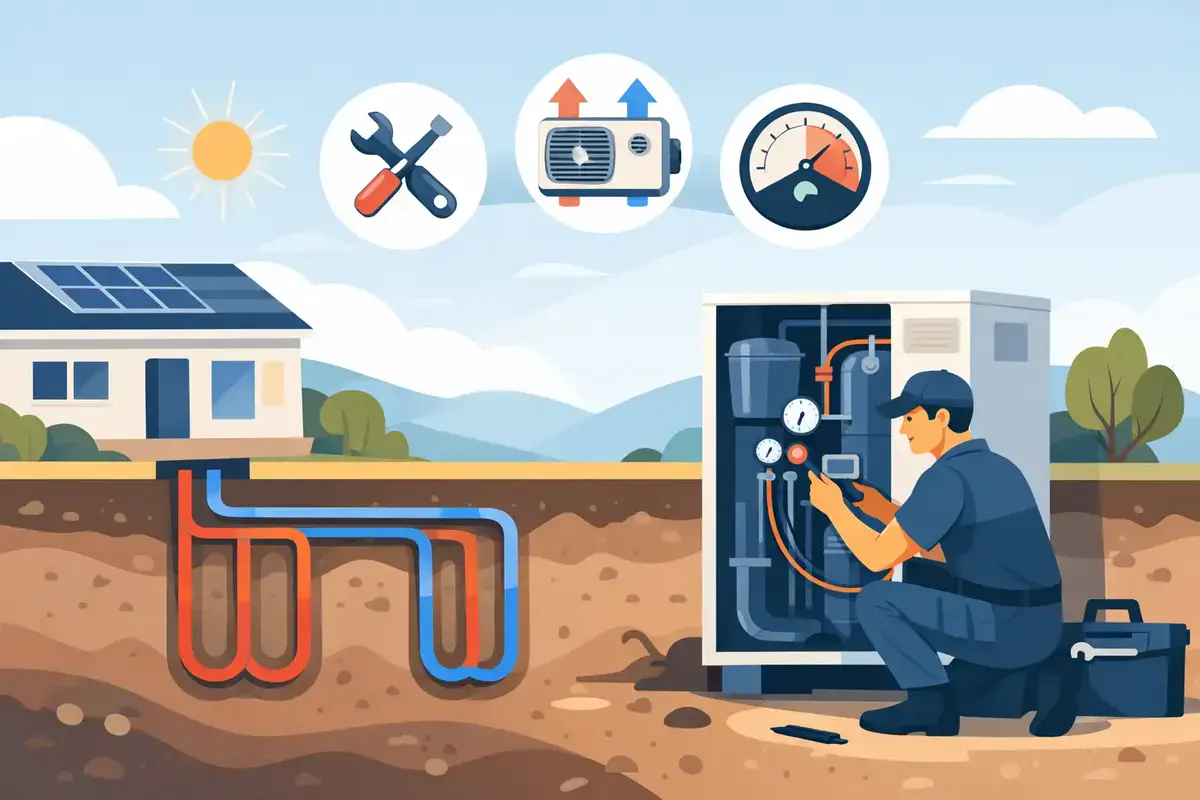
A geothermal system usually earns its reputation the quiet way – by running efficiently for years with very little drama. That is exactly why a problem can catch a property owner off guard. When geothermal HVAC repair is needed, the issue is often more specialized than a standard furnace or air conditioner problem, and the right diagnosis matters as much as the repair itself.
Geothermal equipment is dependable, but it is not simple. These systems rely on a heat pump, a loop field, controls, pumps, refrigerant components, and in many cases auxiliary equipment that all have to work together. When one part falls out of step, comfort drops, utility costs can rise, and a small issue can become an expensive one if it is ignored.
What makes geothermal HVAC repair different
A geothermal system does the same basic job as other HVAC equipment – heating and cooling the building – but it gets there in a different way. Instead of rejecting or absorbing heat from outside air, it uses the relatively stable temperature below ground or through a water-source loop. That design can deliver impressive efficiency, but it also means service calls require a technician who understands more than standard split-system diagnostics.
In a conventional air-source system, many problems point quickly to familiar causes such as a dirty condenser coil, a failed outdoor fan motor, or low refrigerant charge from a visible issue. With geothermal equipment, the symptoms can be less obvious. A temperature complaint might involve the heat pump itself, but it could also trace back to loop flow problems, pressure issues, controls, circulators, or heat exchanger performance.
That is why repair work on these systems should not be approached with guesswork. A proper service call should include system performance testing, electrical checks, airflow verification where applicable, and loop-side evaluation. Replacing parts without confirming the root cause can waste time and money.
Common signs you may need geothermal HVAC repair
Some geothermal systems fail suddenly, but many give warning signs first. Homeowners and facility operators often notice the space no longer feels comfortable, even though the system appears to be running normally. A unit that runs longer than usual, struggles to maintain temperature, or cycles in an unusual pattern deserves attention.
Higher utility bills can also be a clue. Geothermal systems are often installed for long-term efficiency, so a noticeable jump in operating cost should not be brushed aside. It may point to a pump issue, a heat transfer problem, a control fault, or a compressor working harder than it should.
Unusual noise matters too. Geothermal equipment is generally quiet. Grinding, buzzing, rattling, or persistent vibration can indicate problems with motors, pumps, or internal components. Water leaks or signs of moisture around the unit should also be checked promptly. In some cases, the source is a condensate issue. In others, it may involve the hydronic side of the system.
If the thermostat settings seem correct but the delivered air is not matching the call for heating or cooling, that is another sign the system needs professional evaluation. Delaying service can put additional strain on expensive components.
The most common geothermal system problems
Many repair calls involve the same categories of faults, even though the exact fix can vary by manufacturer and system design.
Flow and loop-side issues
Geothermal systems depend on proper water or antifreeze solution flow through the loop. If flow is restricted, heat transfer suffers. That can happen because of air in the lines, pump failure, clogged strainers, pressure imbalance, valve issues, or sediment in parts of the system. When loop flow is off, comfort and efficiency usually drop together.
Circulator and pump failures
Pumps are critical to system operation, and when they weaken or fail, the heat pump cannot exchange heat as designed. Sometimes the problem is electrical. Sometimes it is mechanical wear. In older systems, pump replacement may be straightforward, but the underlying reason for the failure still needs to be confirmed.
Refrigerant circuit problems
Geothermal heat pumps still use refrigerant, compressors, coils, and metering devices. Low refrigerant charge, compressor faults, and refrigerant restrictions can all affect performance. The difference is that symptoms may overlap with loop-side problems, which is why a complete diagnostic process matters.
Control and thermostat faults
A geothermal system is only as reliable as its controls. Faulty sensors, thermostat communication issues, control board failures, or wiring problems can cause improper staging, lockouts, or inconsistent operation. These can look like major mechanical failures when the real issue is in the controls.
Dirty filters and airflow restrictions
This is one of the simpler problems, but it should not be overlooked. If the indoor side of the system cannot move enough air, capacity drops and strain increases. Restricted airflow can contribute to comfort complaints and can make technicians chase more complex causes if basic maintenance has been neglected.
Why accurate diagnosis matters
Geothermal systems reward careful service and punish assumptions. A technician can swap a thermostat, add refrigerant, or replace a pump, but if the actual problem is elsewhere, the system may still underperform. That is frustrating for the customer and hard on the equipment.
A sound repair process should begin with the full picture. What is the system doing, and what is it failing to do? Is the issue happening in heating, cooling, or both? Has performance changed gradually or suddenly? Those details matter because they point the technician toward loop, refrigeration, electrical, or airflow problems.
For residential and commercial owners in the Dallas area, this is especially important because advanced systems are often installed in properties where comfort expectations are high and downtime is disruptive. A geothermal unit in a custom home or light commercial building should be serviced by someone comfortable with specialized HVAC diagnostics, not just general repair.
Repair or replace? It depends on the system and the failure
Not every geothermal problem means replacement, and not every repair is the smart long-term choice. The right answer depends on the age of the system, the condition of major components, repair history, operating cost, and whether parts are still readily available.
If the problem is a control issue, a pump failure, or another isolated component fault, repair is often the sensible route. If the compressor is failing in an older unit with multiple recurring issues, the conversation changes. The loop field may still be in good shape while the indoor equipment is nearing the end of its service life. In that situation, replacing the heat pump while preserving usable loop infrastructure may make more financial sense than continuing to patch an aging system.
There is also a practical consideration. Some customers want the lowest immediate cost. Others want the most reliable path over the next ten to fifteen years. Neither priority is wrong, but the recommendation should match the customer’s goals and the system’s actual condition.
How to reduce future geothermal HVAC repair needs
Preventive maintenance makes a real difference with geothermal equipment. These systems are durable, but they are not maintenance-free. Regular service helps catch pressure irregularities, pump wear, electrical issues, and airflow problems before they turn into breakdowns.
Filter changes are the simple part. The more technical side includes checking refrigerant performance, confirming loop circulation, inspecting electrical components, verifying controls, and making sure the unit is operating within design conditions. Small corrections made early are usually far less disruptive than emergency repairs later.
This is one reason many property owners work with an established HVAC contractor rather than waiting for problems to appear. A company with long-term service experience can track patterns over time and spot changes before they become serious. For a specialized system like geothermal, that continuity is valuable.
Choosing the right contractor for geothermal repair
Not every HVAC company is equipped for geothermal service. That does not mean a general HVAC technician lacks skill. It means geothermal systems require additional experience, diagnostic discipline, and familiarity with equipment that many contractors do not see every day.
When you call for service, you want a technician who can evaluate the heat pump, the hydronic or loop side, the controls, and the supporting components as one system. You also want straight answers. If the issue is minor, you should hear that. If the repair is significant or replacement deserves consideration, that should be explained clearly and without pressure.
For a company like M.B. Kiser, that standard is part of the job. Customers who invest in specialized HVAC equipment should expect the same level of expertise when it comes time to maintain or repair it.
A geothermal system is built for long service life, and most problems can be addressed effectively when they are diagnosed early and handled correctly. If your system is showing signs of trouble, the best next step is not to wait for a complete shutdown. It is to have it evaluated by a qualified professional who understands how geothermal equipment is supposed to perform.