If your air conditioner quits in July or your heater struggles on the first cold snap, the problem usually did not start that day. It started months earlier, when routine service was easy to schedule and small issues were still small. That is why the best time for hvac maintenance is not when your system is acting up. It is before the season puts real strain on it.
In North Texas, timing matters more than many homeowners and property managers realize. Our cooling season is long, our heat can be intense, and weather swings can put both heating and cooling equipment to work in the same year. A good maintenance schedule helps you catch wear early, improve efficiency, and reduce the chance of an inconvenient breakdown when service demand is at its highest.
The best time for HVAC maintenance
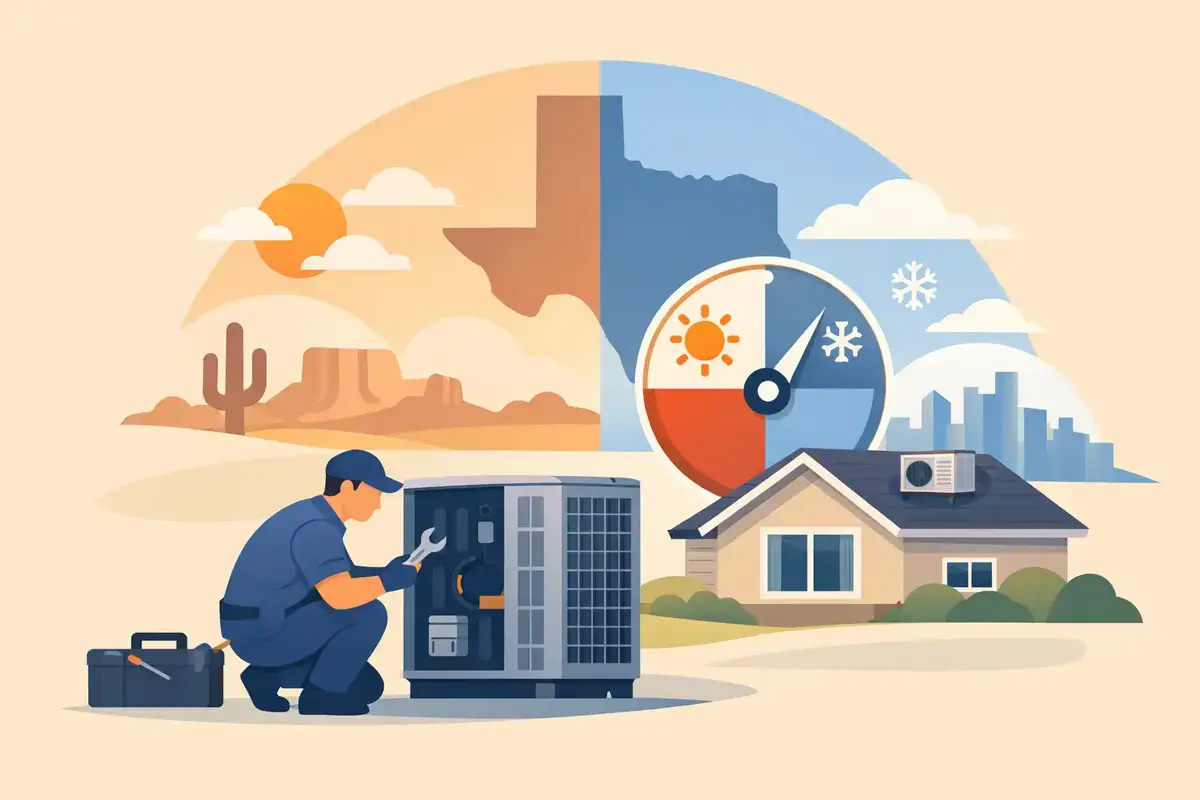
For most systems, the best time for HVAC maintenance is twice a year – once in the spring for cooling and once in the fall for heating. Spring service prepares your air conditioner or heat pump for the heavy summer load. Fall service gets your furnace or heating system ready before cold weather arrives.
That timing is practical for a few reasons. First, your system is usually not running at full capacity during those shoulder seasons, so technicians can inspect performance before extreme temperatures expose weak components. Second, appointment availability is often better before the first heat wave or freeze, when emergency calls begin stacking up. Third, preventive service gives you time to make repairs on your schedule instead of reacting under pressure.
If you only schedule maintenance once a year, spring is often the better choice in Texas because your cooling equipment typically carries the biggest workload. Still, one visit is a compromise. Heating systems need attention too, especially gas furnaces, where safety checks matter as much as performance.
Why spring and fall work best in Dallas-area homes and businesses
In the Dallas area, air conditioning is not a luxury. It is critical equipment that can run hard for months. By spring, your AC should be inspected before daily demand climbs. Coils may need cleaning, refrigerant levels may need to be checked, electrical connections can loosen over time, and drain lines can develop blockages that lead to water damage or shutdowns.
Fall maintenance matters for a different reason. Heating systems often sit idle for long stretches, and the first startup after months of inactivity is when hidden issues show up. Ignition problems, worn belts, dirty burners, cracked components, and airflow restrictions can all affect reliability. With gas heat, maintenance also helps verify the system is operating safely.
Commercial properties benefit from the same schedule, but the stakes are often higher. A rooftop unit serving an office, retail space, or light commercial facility may not get much attention until comfort complaints start. By then, your system may already be losing efficiency or moving toward a more expensive repair. Planned maintenance reduces surprise downtime and helps business owners protect both equipment and occupant comfort.
What happens if you wait until peak season
The worst time to schedule routine HVAC service is during the first major heat wave or cold spell. That is when every neglected system in town starts showing the same symptoms at once. Capacitors fail, drain lines clog, filters collapse, contactors wear out, and older equipment struggles to keep up.
When that happens, you are no longer scheduling maintenance. You are dealing with a repair, and often one that arrives at the busiest time of year. You may face longer wait times, fewer scheduling options, and more discomfort while the issue gets diagnosed and fixed.
There is also the cost side. Preventive service will not eliminate every repair, but it often catches the kind of wear that turns into larger failures. A weak electrical component found during inspection is usually easier to deal with than a full no-cool call on a 102-degree afternoon.
Once a year or twice a year?
This is where the honest answer is, it depends. A newer system in a smaller home with light use may seem fine with annual service for a while. An older system, a larger home, a multi-story property, or a commercial space with long operating hours usually benefits from twice-yearly maintenance.
If you have a heat pump, twice-yearly service is especially smart because the same system handles both heating and cooling. It works year-round and sees more continuous use than a system with separate furnace and air conditioner components.
Indoor air quality needs also affect the schedule. If your property has pets, ongoing dust issues, allergy concerns, or higher occupancy, filters and airflow should be checked more frequently. Maintenance is not only about temperature control. It also supports cleaner operation and better air movement.
Signs your system should be serviced sooner
Even if you plan around spring and fall, some systems need attention earlier. If your utility bills are climbing without a clear reason, if airflow has become uneven, or if one room stays warmer or colder than the rest, it may be time for an inspection. Strange noises, short cycling, persistent odors, excess humidity, and frequent thermostat adjustments are also signs that maintenance should not wait.
The same is true after major construction, remodeling, or ductwork changes. Dust and debris can affect filters, coils, and airflow. A tune-up after that kind of work can help restore proper operation.
For commercial properties, maintenance should move up if comfort complaints increase, operating hours expand, or equipment starts running longer than normal to maintain set temperatures. Those are early warnings, and they are worth taking seriously.
What good HVAC maintenance should actually include
A proper maintenance visit should be more than a quick filter glance and a bill. The value comes from a thorough inspection, cleaning, testing, and adjustment process based on the type of equipment you have.
For cooling equipment, that often includes checking refrigerant performance, cleaning condenser components, inspecting evaporator coils when accessible, testing capacitors and contactors, verifying thermostat operation, clearing drain lines, measuring airflow, and reviewing overall system operation. For heating equipment, the visit may include inspecting burners, testing ignition, checking heat exchangers where applicable, confirming safety controls, evaluating blower performance, and making sure the system starts and runs as it should.
Experienced technicians also look at the full picture. Duct leakage, poor airflow, dirty returns, failing insulation around lines, and aging electrical parts may not stop your system today, but they can affect efficiency and reliability over time. That is often where seasoned service makes a real difference.
Maintenance timing for older systems
Older HVAC equipment needs a little more attention, not because replacement is always necessary, but because wear becomes less forgiving with age. A system that is 10 to 15 years old can still provide dependable service if it has been maintained well. But skipped tune-ups tend to catch up faster on aging equipment.
If your system is older and still performing reasonably well, staying ahead of seasonal maintenance is one of the best ways to extend its useful life. It also gives you a clearer picture of when repair costs are still justified and when it may be smarter to start planning for replacement.
For homeowners who want to avoid being pressured into a sudden equipment decision during extreme weather, this matters. Preventive service creates time to think clearly and budget appropriately.
The value of a maintenance plan
For many property owners, the hardest part of maintenance is not the cost. It is remembering to schedule it before the season changes. A maintenance agreement solves that problem by putting service on a regular schedule and making preventive care part of routine ownership instead of a last-minute task.
That can be especially useful for busy households, second properties, and commercial facilities with multiple systems to manage. It also helps establish service history, which makes future diagnostics more straightforward if an issue does come up.
A long-established contractor such as M.B. Kiser Heating and Air Conditioning understands that maintenance is not just a checklist item. It is part of protecting comfort, controlling operating costs, and avoiding unnecessary disruption.
So when should you book it?
If you are looking for a date on the calendar, aim for March through May for cooling maintenance and September through November for heating maintenance. Earlier in those windows is usually better. You want your inspection done before the weather starts making demands on the system.
If you missed those windows, do not wait for the next perfect season. Late maintenance is still better than no maintenance at all, especially if your equipment is older, running constantly, or showing signs of strain.
The right time is before your HVAC system has to prove itself. A little attention at the right moment can spare you a great deal of inconvenience when temperatures are at their worst.